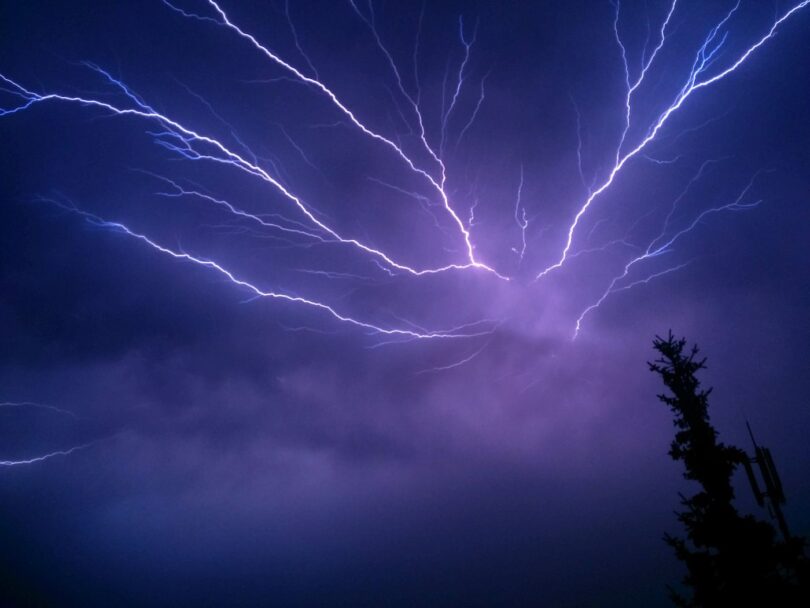

High above a powerful thunderstorm, far beyond the clouds themselves, brief flashes of red light sometimes bloom and vanish in a fraction of a second. These events are called sprites, and for decades they were little more than stories told by pilots who glimpsed something strange above distant storms. Photographs eventually proved them real. Sprites form in the thin upper atmosphere after especially strong lightning strikes below, creating shapes that observers compare to jellyfish or columns of light. Because they last so briefly and sit so high, studying them requires sensitive cameras pointed at storms from a long distance away on clear, dark nights. Sprites belong to a family of brief upper-atmosphere flashes that also includes blue jets and faint rings called elves, each with its own shape and altitude. Together they are known as transient luminous events, a name that captures how suddenly they appear and disappear. Pilots’ early reports were often dismissed because the flashes left no trace by morning.
What the Evidence Shows
Researchers are interested in sprites because they reveal how thunderstorms exchange energy with the upper atmosphere. Each flash briefly changes the electrical conditions tens of kilometres above the weather people experience at the ground. Space station cameras and networks of ground observers now record sprites routinely, allowing scientists to compare their size, colour and timing with the lightning that triggered them. The work also improves understanding of similar flashes reported on other planets. For amateur sky watchers, sprites remain a rewarding challenge: choose a distant storm, a dark sky and a patient camera, and the apparently empty air above the clouds may suddenly perform. For observers hoping to see one, distance is the secret. A storm a hundred kilometres away, viewed across dark countryside, places the space above the clouds in clear view while the lightning itself stays safely remote. Sprites favour the largest storm systems, especially those rumbling through the night over plains and warm seas. Reporting and analysis from sources such as National Science Foundation track the same developments, and specialists following red sprites say the direction is now consistent across independent lines of evidence.
The Wider Context
The wider context is a research landscape in which replication and open data now decide reputations. Findings connected to red sprites are being checked by independent groups with shared datasets, and the teams involved publish their methods in full so rivals can test every step. That discipline is slower than a headline cycle, but it is why results in this area increasingly survive first contact with scrutiny.
What Happens Next
What happens next in the story of red sprites will be decided by follow-up work already under way: larger samples, longer observation and instruments that have not yet come online. The researchers involved are unusually united on one point, that the current results justify the next investment of time and money. Readers will not have to wait long for the first tests of that claim. You can follow related developments in our coverage of science.
There is a practical lesson in all of this for readers deciding what to do today. Start with the verified facts, be wary of anyone promising certainty, and prefer reversible steps while the evidence is still developing. Circumstances differ by country, income and personal situation, so general guidance should always be weighed against your own context before you act on it in any significant or lasting way.