
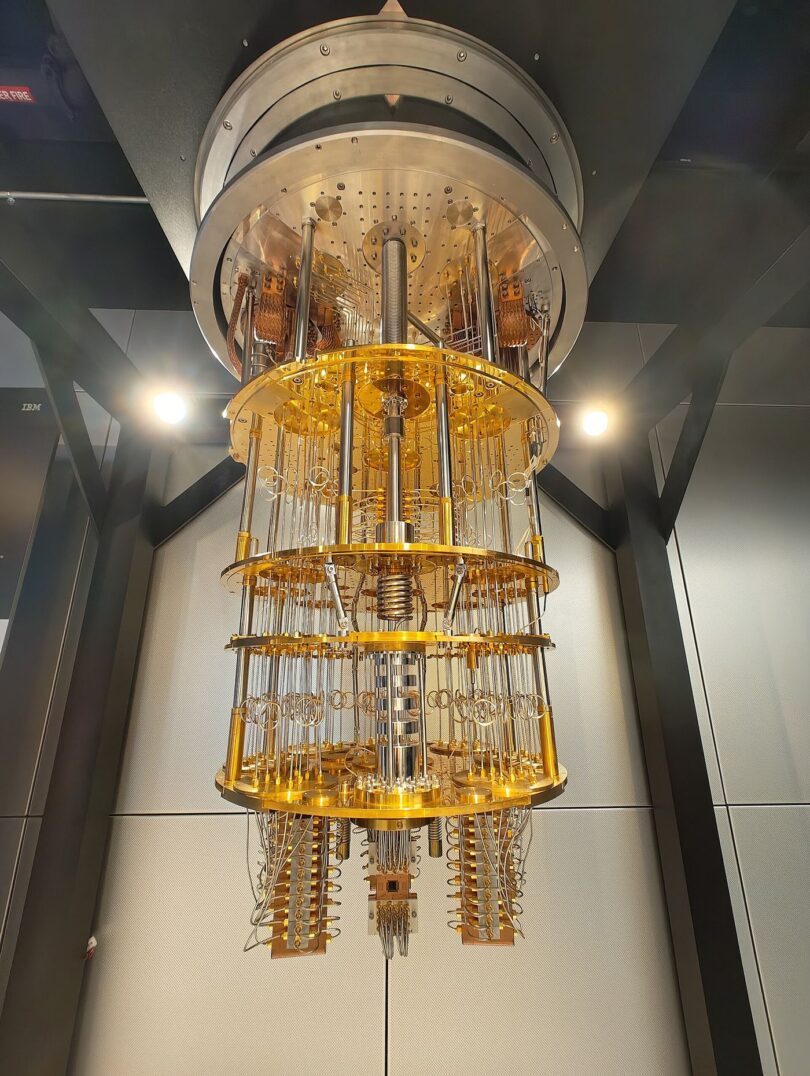

IBM announced plans on 16 November with NVIDIA and Fermilab to build a modular quantum-classical co-design platform, pairing powerful conventional supercomputers with quantum machines. The project will co-locate NVIDIA DGX B200 systems with IBM quantum computers, including systems powered by the IBM Quantum Nighthawk processor, so that the two kinds of hardware can work on a single problem together. Quantum computers handle certain calculations in ways classical machines cannot, but they still need conventional systems to prepare problems, correct errors and interpret results. Building them side by side, rather than in separate facilities, is meant to make that partnership fast and practical. Fermilab, the particle physics laboratory near Chicago, will use the system for simulations of subatomic particles, calculations that are far beyond the reach of ordinary computers.
What the Evidence Shows
Hybrid quantum-classical computing is aimed at problems that neither technology can solve alone, from simulating new materials and molecules to modelling the particle collisions studied at Fermilab. Scientists hope the platform will speed up the search for better batteries, catalysts and medicines, and help answer fundamental questions in physics. The obstacles remain formidable: quantum bits are fragile, error rates are high, and scaling up to useful machines will take years of engineering. But by designing the hardware and software together, the three partners aim to learn what a working quantum data centre should actually look like. Progress will be measured in small steps: fewer errors, longer calculations and problems that grow steadily closer to real-world science rather than demonstrations in a laboratory. Reporting and analysis from sources such as IEEE Spectrum track the same developments, and specialists following the quantum-classical computing platform from IBM and NVIDIA say the direction is now consistent across independent lines of evidence.
The Wider Context
Adoption of the quantum-classical computing platform from IBM and NVIDIA follows a familiar pattern with an unfamiliar speed. Early users tolerate rough edges in exchange for advantage, mainstream users arrive when the tool disappears into existing workflows, and the market consolidates around whoever made that transition feel effortless. Vendors are racing less on raw performance now than on integration, support and trust.
What Happens Next
The realistic forecast for the quantum-classical computing platform from IBM and NVIDIA is steady integration rather than sudden replacement: embedded in products people already use, improving in increments, and regulated in proportion to its reach. The companies and institutions that plan on that basis, training staff and redesigning processes instead of chasing launches, are the ones the adoption data tends to vindicate. You can follow related developments in our coverage of technology.
It is also worth remembering how quickly the picture in this area has changed before. Positions that looked settled a few years ago have been revised as new data arrived, and the same humility is appropriate now. The strongest coverage of this subject, and the most useful advice, tends to come from sources that update their views openly when the facts move, rather than defending an earlier position long after it has stopped fitting the evidence available.