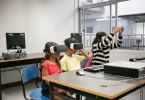


Gamification in virtual learning is revolutionizing education by making lessons more engaging. At newspackets, we highlight how game elements like rewards and challenges boost student participation in online classrooms.
With e-learning on the rise, gamification plays a key role in enhancing the learning experience. It keeps students motivated and actively engaged, creating a fun and competitive environment.
What is Gamification in Virtual Learning?
Gamification in virtual learning involves incorporating game-like elements such as scoring systems, competition, challenges, and rewards into digital classrooms. By simulating game dynamics, educational platforms encourage students to engage more deeply with the content.
This trend is rapidly gaining traction because it makes learning less tedious. By rewarding progress and creating friendly competition, students are more motivated to succeed. Gamification gives them a sense of achievement, fostering a positive attitude towards learning.
Benefits of Gamification in Virtual Learning
1. Increased Student Engagement:
Gamification motivates students to participate actively. By turning lessons into interactive challenges, students find themselves more involved and interested in the subject matter.
2. Instant Feedback:
With game mechanics, students receive real-time feedback on their performance. This instant gratification helps them understand where they excel and where they need improvement.
3. Enhanced Retention:
Games are designed to promote repetition and mastery, which leads to better retention. Learning through gamified platforms ensures students remember key concepts long-term.
4. Fostering Healthy Competition:
Leaderboards and points systems introduce an element of friendly competition. Students compete against their peers, pushing themselves to improve and achieve more.
Challenges of Implementing Gamification in Education
1. Technological Barriers:
Not every school has the infrastructure to implement gamification effectively. High-speed internet and suitable devices are necessary to ensure a smooth experience for all students.
2. Balancing Fun with Learning:
While games are fun, the core of education must remain intact. It’s important to ensure that the gamified elements align with the learning objectives, so education doesn’t take a backseat.
3. Teacher Training:
Educators must be adequately trained to incorporate gamification into their lessons. This requires time, effort, and resources, which can be a challenge for some schools.
Popular Platforms Using Gamification for Virtual Learning
1. Duolingo:
Duolingo gamifies language learning with a points system, levels, and daily challenges. Learners earn rewards and can track their progress as they move through various levels of difficulty.
2. Kahoot!:
This platform uses quizzes and games to review knowledge. Teachers can create fun, interactive sessions that engage students in a competitive format.
3. Classcraft:
Classcraft turns the classroom into an adventure where students become heroes completing quests and earning points. This gamified system encourages collaboration, responsibility, and progress.
Student Experience with Gamification in Learning
Students report feeling more motivated and excited about learning with gamified platforms. The interactive elements make schoolwork feel less like a chore and more like an adventure. They can track their progress, earn badges, and compete against peers, all of which encourage them to stay on track.
Some students also mention how it helps them understand complex concepts more easily, as gamified platforms break down difficult topics into digestible challenges. The sense of achievement from completing a task or winning a reward reinforces their learning and builds confidence.
Why Gamification is the Future of Learning
The integration of gamification into virtual learning environments signals a shift in how education will be approached in the future. With the rise of remote and online learning, gamified systems will continue to evolve, offering more personalized, interactive experiences.
The future of gamification in education is vast — from immersive VR worlds where students can explore different time periods to AI-powered games that adapt to students’ learning styles. As technology continues to advance, gamified learning will likely be a core part of modern education.
FAQs
Q1.What is gamification in virtual learning?
A:Gamification in virtual learning refers to adding game-like elements, such as rewards, challenges, and leaderboards, to online educational environments to boost engagement.
Q2.How does gamification improve student motivation?
A:By turning lessons into fun, interactive challenges, gamification encourages students to actively participate and stay motivated to complete tasks and achieve goals.
Q3.Can gamification be applied to all subjects?
A:Yes, gamification can be applied to virtually any subject. It’s especially effective in subjects that require repetition, such as language learning, math, and science.
Q4.Are there any risks with gamification in education?
A:The primary risks are technological barriers, ensuring the balance between fun and educational content, and the need for teachers to be trained in the effective use of gamified tools.
Q5.Is gamification suitable for young students?
A:Absolutely. In fact, younger students are often more responsive to gamification because it makes learning feel like a game, which can keep them engaged and excited.
Q6.What are some examples of gamified learning platforms?
A:Popular platforms include Duolingo for language learning, Kahoot! for interactive quizzes, and Classcraft for immersive classroom adventures.
Conclusion
Gamification in virtual learning is revolutionizing student engagement and success. As technology advances, gamified platforms will provide even more immersive and personalized learning experiences, ensuring a bright future for education.