
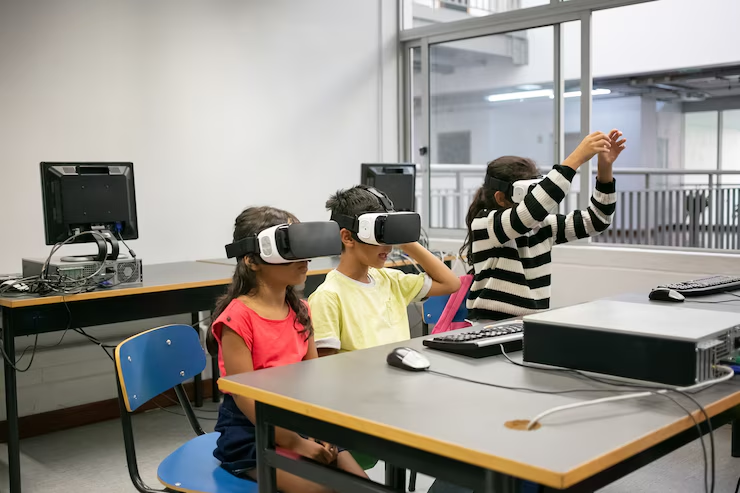

Metaverse classrooms in schools are reshaping the education experience with immersive, interactive learning spaces. At newspackets., we explore how these digital classrooms are unlocking new ways of understanding, collaboration, and creativity. From 3D environments to avatar-led teaching, schools are embracing virtual reality to enhance engagement.
The concept of metaverse classrooms in schools connects traditional education with modern innovation. It enables students to explore global cultures, complex sciences, and real-time simulations all from their desks. This shift empowers young minds with hands-on learning that goes far beyond the textbook.
The Rise of Metaverse Classrooms in Schools
Schools are adapting to digital advancements by introducing metaverse-based classrooms. Students are no longer limited to chalkboards or video lectures. In metaverse spaces, they can visit virtual museums, collaborate on science projects in simulated labs, and attend live global events all within a single platform.
This format boosts attention, retention, and interest. Lessons feel more like experiences than tasks, and students become active participants rather than passive listeners. Teachers can personalize environments for history reenactments, mathematical concepts, or environmental tours using 360-degree visuals.
Benefits of Implementing Metaverse in Education
1. Real-Time Interaction in 3D:
Students communicate through avatars and digital voice in real-time. Whether it’s building together in Minecraft-style worlds or conducting a space mission simulation, interaction becomes engaging and realistic.
2. Enhanced Accessibility:
Remote students and learners with disabilities find equal footing. The metaverse offers audio aids, visual enhancements, and interactive designs for all learning styles.
3. Teacher-Friendly Tools:
Educators create modules with drag-and-drop ease. Assessments, live polling, and feedback tools make tracking student progress more effective.
4. Creative Expression:
Pupils create avatars, design classrooms, and build virtual projects. Creativity is at the heart of learning, sparking motivation and originality.
Challenges Faced by Schools in Adopting Metaverse
1. Infrastructure Gaps:
High-speed internet and VR headsets are still luxuries in many regions. Schools need strong support systems to adopt the metaverse effectively.
2. Training for Educators:
Teachers need time and support to learn metaverse tools. Workshops and resources help ease this shift but require continuous investment.
3. Digital Safety Concerns:
With students interacting online, safety policies must be rock solid. Schools implement monitoring tools, restricted zones, and behavior codes.
Popular Platforms Powering Metaverse Learning
1. ClassVR:
Offers fully immersive lessons across subjects like history, biology, and engineering. Easy-to-use dashboards help teachers manage entire classes.
2. Roblox Education:
This game-based platform introduces coding and game design. Students build, play, and collaborate in safe educational servers.
3. Meta’s Horizon Workrooms (Educational Version):
Designed for discussions, debates, and peer presentations. It promotes professional skills like speaking, listening, and idea-sharing in VR.
Global Examples of Metaverse Classrooms in Action
South Korea:
Selected schools use digital twins of real classrooms. Students take field trips to ancient temples, underwater reefs, and even Mars simulations.
United Arab Emirates:
Dubai has launched metaverse pilot classrooms using VR and AR for STEM learning. Government support boosts implementation speed.
United States:
Schools in Texas and California have partnered with EdTech startups to offer metaverse learning in high school STEM courses and special education.
How Students Respond to the Metaverse Experience
Feedback from students shows excitement and increased motivation. Many say they look forward to lessons more, especially science and history. Some report better understanding through visuals and hands-on interaction.
Surveys show improved collaboration. Students enjoy working on shared builds, quizzes, or debates. Learning feels like play, but outcomes show deeper comprehension and stronger retention.
The Role of Parents in the Virtual Classroom
Parents are getting involved too — attending virtual open houses, meeting teachers through avatars, and tracking progress in digital dashboards. Transparency builds trust between schools and families.
Concerns like screen time or safety are addressed with clear boundaries and scheduled breaks. Most parents appreciate how engaged and confident their children become.
Future of Metaverse Classrooms in Schools
With AI and VR becoming more affordable, metaverse classrooms will soon be the norm, not the exception. Governments and EdTech firms are investing in hardware, training, and platform development to support this transformation.
Imagine students attending global exchange programs without leaving home or solving climate challenges in real-time simulations. These are no longer dreams — they’re digital realities coming to schools near you.
FAQs
Q1.What are metaverse classrooms in schools?
A:These are virtual reality-based digital environments where students attend classes, collaborate, and learn using avatars, 3D visuals, and interactive tools.
Q2.Are metaverse classrooms better than traditional ones?
A:They offer deeper engagement and accessibility, especially for remote or diverse learners. The immersive experience often improves understanding and creativity.
Q3.Do metaverse classrooms require special hardware?
A:Yes, VR headsets, stable internet, and compatible devices are essential. However, lightweight versions are available for mobile and browser-based use.
Q4.Can teachers create their own lessons in the metaverse?
A:Absolutely. Many platforms allow educators to design custom lessons using templates, media, and simulations tailored to curriculum needs.
Q5.Are metaverse classrooms safe for school students?
A:Yes, schools use secure platforms with parental controls, behavior rules, and privacy settings to ensure safe digital environments.
Q6.What age group benefits most from metaverse classrooms?
A:While older students may adapt faster, even primary school learners benefit from gamified, sensory-rich learning modules in virtual spaces.
Conclusion
Metaverse classrooms in schools are not just a trend — they are a powerful shift in how students learn and grow. By blending real-time interaction, gamified environments, and global access, they nurture skills beyond textbooks. As more schools embrace this digital frontier, the path to creative, confident, and future-ready learners becomes clearer than ever.