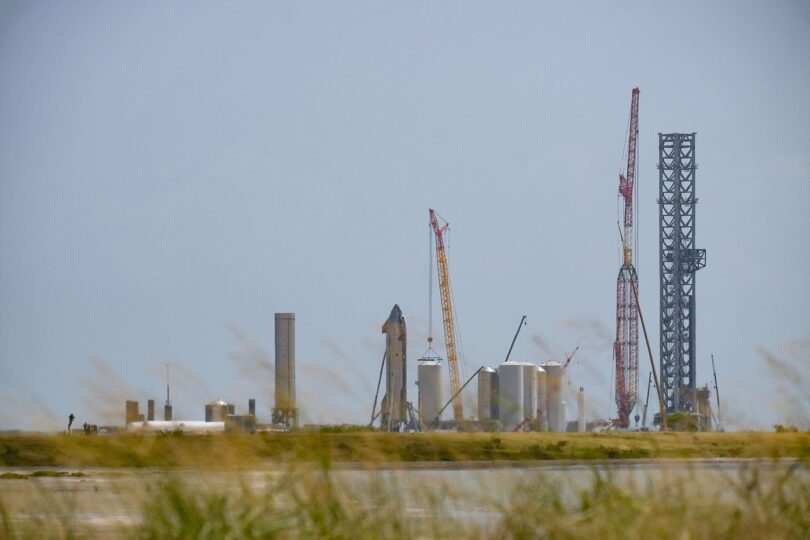

On 13 October 2024, SpaceX pulled off the most spectacular catch in the history of spaceflight. Minutes after launching its Starship rocket from Texas, the company steered the 71-metre-tall Super Heavy booster back to the launch pad, where two giant mechanical arms, nicknamed chopsticks, caught it in mid-air as it slowed to a hover. The booster had climbed to the edge of space, separated from the Starship spacecraft, flipped around and fired its engines to brake from supersonic speed, before sliding between the arms of the launch tower. It was the fifth test flight of Starship, the largest and most powerful rocket ever built, standing 121 metres tall with 33 engines producing about twice the thrust of NASA’s Saturn V. The Starship spacecraft itself flew on to a controlled splashdown in the Indian Ocean.
What the Evidence Shows
Catching the booster matters because it makes the rocket reusable in a way no large rocket has been before. SpaceX’s Falcon 9 already lands on legs, but Starship is designed to be caught, refuelled and launched again within hours, with no legs to carry and no transport back from a landing pad. That speed is essential to the company’s plan to fly Starship hundreds of times a year, carrying satellites, cargo and eventually people to the Moon and Mars. NASA has chosen Starship as the lander for its Artemis Moon missions, and SpaceX has repeated the catch several times since, though later flights also showed the risks, with one booster exploding on a subsequent attempt. The chopsticks have turned science fiction into routine, and the race is now to make the catch boring. Reporting and analysis from sources such as IEEE Spectrum track the same developments, and specialists following SpaceX Starship booster catch say the direction is now consistent across independent lines of evidence.
The Wider Context
Adoption of SpaceX Starship booster catch follows a familiar pattern with an unfamiliar speed. Early users tolerate rough edges in exchange for advantage, mainstream users arrive when the tool disappears into existing workflows, and the market consolidates around whoever made that transition feel effortless. Vendors are racing less on raw performance now than on integration, support and trust.
What Happens Next
The realistic forecast for SpaceX Starship booster catch is steady integration rather than sudden replacement: embedded in products people already use, improving in increments, and regulated in proportion to its reach. The companies and institutions that plan on that basis, training staff and redesigning processes instead of chasing launches, are the ones the adoption data tends to vindicate. You can follow related developments in our coverage of technology.
It is also worth remembering how quickly the picture in this area has changed before. Positions that looked settled a few years ago have been revised as new data arrived, and the same humility is appropriate now. The strongest coverage of this subject, and the most useful advice, tends to come from sources that update their views openly when the facts move, rather than defending an earlier position long after it has stopped fitting the evidence available.