

City water departments face a frustrating statistic. A survey of 15,000 people across 81 countries found bottled water consumption persisting despite broad awareness of microplastics, with convenience, marketing and concerns about safe drinking water all in the mix. A water department cannot fix marketing. It can work on the trust component, and the experience of cities that have moved the needle suggests the work is specific enough to list. Our blog sets out the list.
Publish Proof People Can Actually Read
Most utilities already test their water constantly and publish the results somewhere compliance-shaped and unreadable. The cities gaining trust publish differently: results by neighbourhood, in plain language, on a schedule residents can anticipate, with honest explanations when a measure drifts. The standard such transparency is judged against is visible in the EPA’s public drinking water resources. Proof that has to be hunted for does not function as proof; it functions as a rumour that the city is hiding something.
Fix the Last Hundred Metres
Municipal water can leave the treatment plant in perfect condition and arrive through a building’s corroded plumbing tasting of metal. Residents judge the tap, not the plant, so cities serious about trust increasingly work on the last stretch: pipe replacement programmes targeted at the oldest housing, free or subsidised testing for individual homes, and clear guidance on flushing after works. The global survey reported via ScienceDirect underlines why this matters: perceived safety at the point of drinking, not at the reservoir, drives the bottled habit.
Be Present Where Water Is Drunk
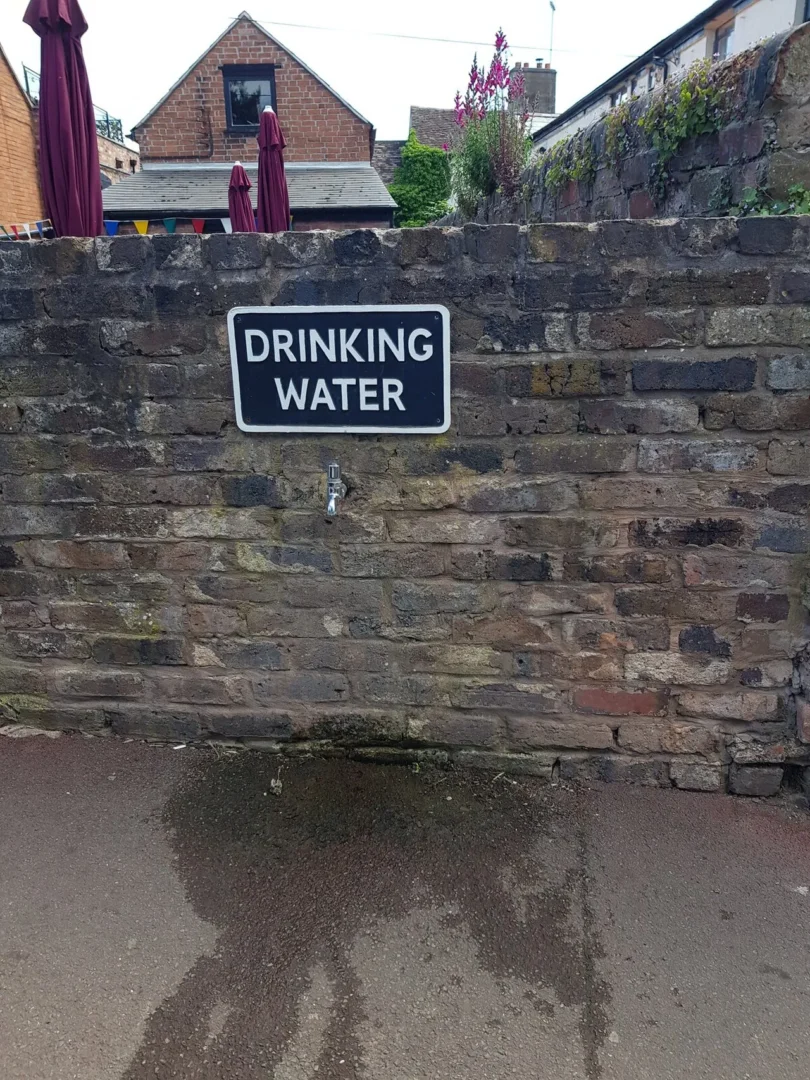
The final lever is presence. Working fountains in parks and stations, refill points in schools and markets, water served by default in public buildings: each one is a small public demonstration that the city drinks its own product. Broken fountains send the opposite message at the same volume, which is why maintenance budgets, unglamorous as they are, belong in any trust strategy.
The Realistic Ambition
The Cost Argument a City Can Take to Its Taxpayers
There is a financial version of this argument that councils understand immediately. Bottled water costs households hundreds of times more per litre than tap water, and the burden falls hardest on the households least able to carry it: the same families, in the same districts, whose distrust is most grounded in the city’s own history. Every percentage point of trust recovered is therefore a quiet, progressive saving delivered without a benefits programme, alongside the avoided plastic and the avoided lorries. Reframing tap trust as household economics gives the work a constituency beyond the environment committee.
It also sets the success criterion honestly. The city is not trying to win an argument about chemistry; the chemistry, in most systems, is already on its side. It is trying to reduce the number of families paying a distrust tax at the supermarket. That is measurable, improvable and worth funding like the infrastructure it depends on: pipes, testers, fountains and the people who publish the results. Trust follows evidence delivered consistently over time, and time, unlike money, is the one budget every city spends whether it chooses to or not.
A Final, Practical Test
Here is a test any resident can apply to their own city. Can you find your neighbourhood’s latest water-quality results in under five minutes? Does the fountain nearest your home work today? When pipes were last repaired on your street, did anyone tell you what that meant for your tap? Three yeses describe a city doing the trust work. Anything less describes a city still wondering why the bottles keep selling, and the survey numbers in this story describe exactly how that wondering ends.
No city will abolish the bottle; convenience alone guarantees its survival. The realistic ambition is to make the tap the default again for the residents who currently buy water out of doubt rather than desire. That is achievable, and it is achieved the slow way: published proof, fixed pipes, working fountains, repeated until the doubt has nothing left to stand on. More practical public-service reads are on the newspackets.com homepage.