
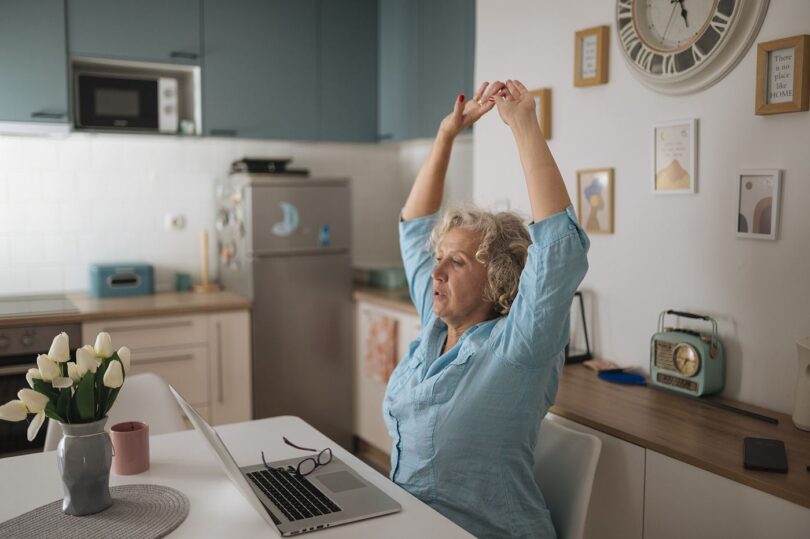

The first minutes of the morning often shape the tone of everything that follows. Gentle movement, such as stretching by a window, walking around the home, or simple mobility exercises, helps the body wake gradually and signals to the mind that the day has begun with intention. Psychologists who study routines note that small, positive starting rituals create a sense of control, even on busy days. The movement does not need to be intense or long. Five to ten minutes is enough to loosen stiffness, deepen breathing, and shift attention away from the phone and towards the day ahead. For many people, that quiet start becomes a valued anchor.
What the Evidence Shows
Consistency matters more than complexity. Choosing movements that feel pleasant, laying out comfortable clothes the night before, and pairing the routine with natural light or a favourite drink all make the habit easier to keep. People who work irregular hours can adapt the idea to whatever their morning looks like. The mental benefit comes partly from keeping a small promise to yourself at the start of the day, which builds confidence for larger tasks later. Over weeks, a gentle morning routine can improve energy, reduce the feeling of rushing, and create a calmer transition between sleep and the responsibilities of work and family life. Reporting and analysis from sources such as American Psychological Association track the same developments, and specialists following gentle morning movement and mindset say the direction is now consistent across independent lines of evidence.
The Wider Context
The wider context is a discipline rebuilding confidence through replication and pre-registration, and findings on gentle morning movement and mindset are being reported with their effect sizes and limits attached. That honesty can make results sound smaller than the headlines of a decade ago, but the effects that survive are the ones practitioners can responsibly build on.
What Happens Next
What happens next in research on gentle morning movement and mindset is a turn toward real-world trials: longer, larger and conducted in the schools, workplaces and clinics where the findings are meant to apply. Psychologists are also studying individual differences more seriously, because average effects conceal the people for whom an approach works powerfully and those it leaves cold. Both shifts make the science slower and more useful. You can follow related developments in our coverage of psychology.
There is a practical lesson in all of this for readers deciding what to do today. Start with the verified facts, be wary of anyone promising certainty, and prefer reversible steps while the evidence is still developing. Circumstances differ by country, income and personal situation, so general guidance should always be weighed against your own context before you act on it in any significant or lasting way.
It is also worth remembering how quickly the picture in this area has changed before. Positions that looked settled a few years ago have been revised as new data arrived, and the same humility is appropriate now. The strongest coverage of this subject, and the most useful advice, tends to come from sources that update their views openly when the facts move, rather than defending an earlier position long after it has stopped fitting the evidence available.