
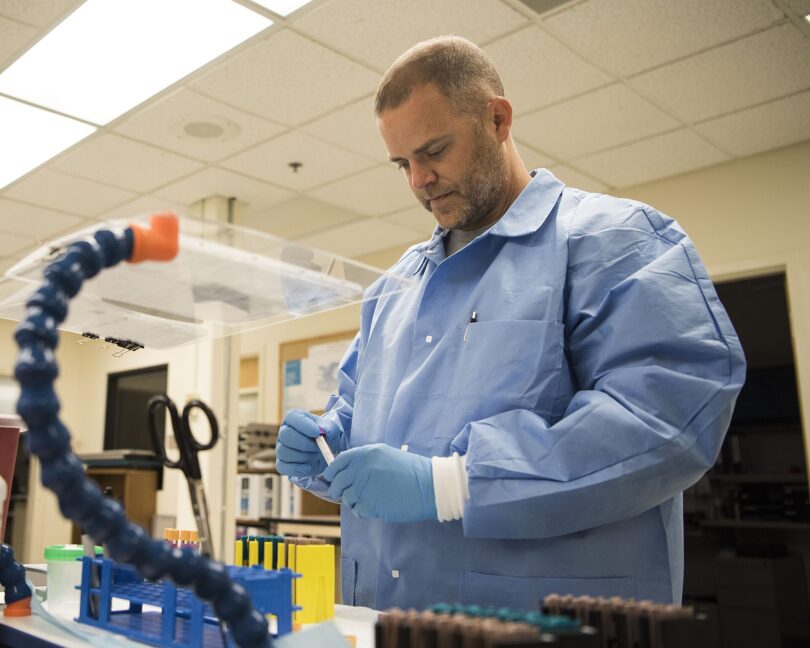

For decades, confirming Alzheimer’s disease in a living patient meant one of two difficult things: a PET brain scan costing thousands, available mainly at specialist centres, or a lumbar puncture to sample spinal fluid. Most people with memory problems received neither, and diagnosis rested on symptoms alone — with studies suggesting clinicians got the underlying cause wrong in a quarter to a third of cases. That era is ending, replaced by something disarmingly ordinary: a tube of blood.
Blood tests measuring phosphorylated tau — particularly a marker known as p-tau217 — alongside amyloid ratios, now identify Alzheimer’s pathology with accuracy around ninety per cent in multiple large studies, rivalling the scans they may partly replace. Regulators in the United States have cleared the first such tests for use in specialist and, increasingly, primary care settings. Readers of our health coverage should understand both the promise and the important limits of what a positive result actually means.
Why the Test Works Now
The science succeeded because measurement technology caught up with biology. Alzheimer’s pathology leaks tiny quantities of distinctive proteins into the blood, but until recently they were diluted beyond reliable detection and swamped by similar proteins from the rest of the body. Ultrasensitive assays, refined over the past decade, can now count those molecules — and p-tau217 turned out to rise early, specifically and dramatically in Alzheimer’s, distinguishing it from other dementias with unusual clarity.
Validation has also improved. Early claims came from research cohorts that were younger and healthier than real clinic populations. The newer studies, including primary-care trials in Sweden followed by work elsewhere, tested consecutive real patients with memory complaints — and accuracy held up, while specialist clinical judgement alone, in the same patients, was markedly worse.
What Changes in the Clinic
The immediate change is triage. A GP who suspects dementia can use the blood test to decide who needs urgent specialist referral and scarce scanning, and who can be reassured and monitored. That matters enormously for the new generation of anti-amyloid antibody treatments, which require confirmed pathology, work best early, and carry real risks — a combination that makes accurate, accessible diagnosis the bottleneck of the whole treatment pathway.
Guidance from bodies such as the National Institutes of Health community stresses the test is an aid, not a verdict. A positive result in someone without symptoms does not mean dementia is inevitable, and researchers are still debating whether — and how — such results should ever be returned to healthy volunteers or used in screening, where false positives could cause serious harm and anxiety.
The Questions That Follow
Cost and equity come next. A blood test is far cheaper than a scan, but someone must pay for the testing, the counselling around it and the follow-up capacity it will unleash; memory services already struggle with waiting lists. There are also hard questions about insurance and employment if Alzheimer’s risk becomes a line in a routine blood panel, and about performance in populations under-represented in the original studies.
None of that diminishes the step change. Diagnosis is shifting from a scarce, late, specialist event to a comparatively routine early one — and health systems designed around the old model will have to reorganise around the new.
The Bottom Line
Alzheimer’s blood tests will not cure anyone, but they change who gets diagnosed, how early, and how fairly. Used carefully, they are among the most consequential diagnostic advances of the decade — a reminder that progress in medicine, like progress in transport examined in our comparison of battery swapping and fast charging for EVs, often turns on infrastructure catching up with invention.