
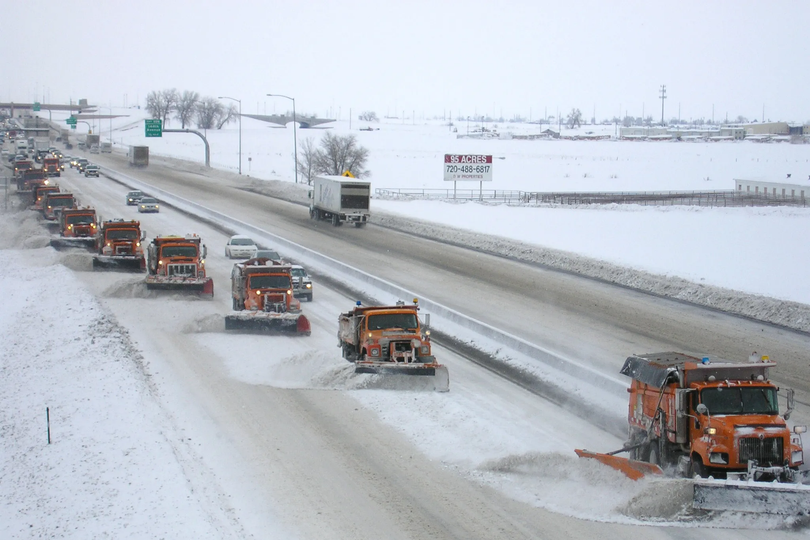

Highway-adjacent and mountain-corridor properties should not be purchased under the same winter scope as a flat urban parking lot.
Elevation changes, drifting, steep grades, shaded pavement, highway access, truck traffic, and rapid weather transitions can make two areas on the same property behave differently during one storm.
For Snow Removal Expert, the practical answer is a property-specific operating standard rather than a vague promise to “clear as needed.” Fast clearing, modern equipment, 24/7 availability, scheduled plans, safety-focused ice control, and transparent pricing become more meaningful when procurement teams define what acceptable performance actually looks like.
The standard should describe the required outcome by zone.
A primary truck entrance may require continuous usable access during an event. An employee parking expansion may tolerate accumulation longer. A shaded grade may need inspection and traction treatment before another part of the site requires plowing.
The first procurement principle is therefore simple: buy defined service levels, not an undefined amount of contractor effort.
Define Service Levels Before Comparing Bids
Effective winter service planning for Chilliwack properties should begin with a master scope that vendors price against consistently. Otherwise, a low bid may simply represent fewer visits, slower response, less material, or a narrower definition of completion.
Create Priority Classes
Divide the property into operational tiers.
Priority 1 might include highway connections, emergency access, steep truck routes, gates, loading approaches, and critical pedestrian paths. Priority 2 can cover employee parking, secondary circulation, and routine building access. Lower-use storage or overflow areas can follow.
British Columbia’s highway maintenance specifications use a similar risk-based principle. Grades above 5%, certain curves, intersections, shady sections, and black-ice-prone locations receive faster traction-restoration expectations than ordinary sections of road.
Those provincial specifications are not private-property requirements, but the procurement lesson transfers well: risk should determine service priority.
Write Measurable Completion Conditions
Avoid language such as “property to be reasonably clear.”
Specify what completion means for each zone. That could include usable truck width, cleared loading approaches, accessible emergency routes, inspection of known icy areas, or removal of windrows from designated entrances.
The more measurable the scope, the easier it becomes to compare vendor pricing fairly.
The Cheapest Bid May Be Buying Less Capacity
Cost differences between winter contractors are not always markup differences. They can represent completely different assumptions about capacity.
A contractor pricing one initial pass is not offering the same service as a provider reserving equipment for repeat cycles during prolonged snowfall.
Procurement teams should therefore ask what the quoted price includes: dedicated or shared equipment, estimated response window, repeat visits, overnight coverage, material allowances, snow relocation, emergency callouts, and backup capacity.
This is where a coordinated commercial snow and ice management model becomes relevant. A portfolio with highway-adjacent locations may benefit from centralized dispatch and regional backup because conditions can intensify unevenly across the route.
Truck circulation should also be priced as an operational requirement. A wide yard may be easy to plow, while a steep approach connecting that yard to the highway consumes more time, material, and attention.
Compare the cost of keeping the operation functional—not simply the cost per acre.
Specify Triggers, Materials, and Drainage
A master scope should tell the contractor when the service expectation changes.
Snow depth alone is rarely enough for a mountain-corridor property. Wind, pavement temperature, precipitation type, traffic compaction, visibility, and overnight cooling can create service needs before a standard accumulation threshold is reached.
Tie Materials to Conditions
Do not build procurement around one fixed quantity of salt.
The scope should require material selection to reflect temperature, surface type, environmental constraints, and the desired outcome. Mechanical removal should remain the first tool for significant accumulation, while ice-control materials address bonding and traction conditions that plowing alone cannot solve.
The contract should also explain how additional material use is priced. That prevents uncertainty when a difficult freeze-thaw event requires more treatment than a typical snowfall.
Make Drainage Part of the Scope
Mountain and hillside properties move water quickly.
Snow stored above a truck lane, entrance, or shaded slope can melt during daytime warming and refreeze later. Culverts, catch basins, ditches, and low points should therefore appear on the winter site map.
Drainage inspections may cost very little compared with repeatedly treating ice caused by the same blocked runoff path.
Bad Weather Exposes Bad Procurement
A winter standard should be written for the difficult storm, not the average one.
Highway 1 between Chilliwack and Hope is a useful regional illustration. B.C. introduced enhanced multi-lane plowing provisions on this corridor because of high traffic volumes, significant commercial-vehicle use, and rural mountain-pass conditions.
Private sites operate at a different scale, but procurement leaders face the same underlying issue: capacity matters most when conditions deteriorate.
For structured commercial winter maintenance around Chilliwack, the scope should therefore define escalation rules.
What happens when snowfall exceeds the original forecast? Which routes receive another pass first? What if a truck breaks down? How much backup capacity is available? When is snow relocated rather than simply stacked? Who can authorize additional service?
Price the Exception Before It Happens
Create unit pricing for predictable exceptions: extra plow cycles, loader hours, hauling, emergency callouts, additional ice-control applications, or extended standby.
This reduces negotiations during the storm and makes competing proposals easier to evaluate.
Protect the Highway Connection
The property entrance should be treated as part of the operating system.
A perfectly cleared yard has little value if a windrow, icy grade, or restricted gate prevents trucks from reaching the highway. Require inspections of the transition between private access and the public-road interface, especially after municipal or provincial plowing activity.
Build Reporting Into the Service Standard
The final part of the master scope should explain how performance will be verified.
Require service records showing arrival and departure times, areas completed, conditions observed, equipment used, material applications, exceptions, photos where useful, and planned return visits.
Reporting should match the priority map. A generic note saying “site plowed” is less useful than knowing that the primary truck route was cleared at 3:10 a.m., the shaded grade received traction treatment, and the overflow area remained scheduled for a later pass.
After major events, compare actual performance with the procurement assumptions.
Did the response windows work? Was enough equipment reserved? Did snow storage reduce truck circulation? Were material allowances realistic? Did the highway entrance need more frequent attention than expected?
Use those findings when renewing or rebidding the contract.
A strong winter-service standard gives procurement leaders something far more useful than the lowest headline price. It creates a common operating definition that every bidder must price.
For highway and mountain-corridor properties, that definition should cover weather variability, grades, highway access, truck movement, drainage, materials, escalation, backup capacity, and reporting.
When those elements are standardized before pricing begins, the buying decision becomes clearer—and the cheapest proposal can finally be compared with what it actually includes.