
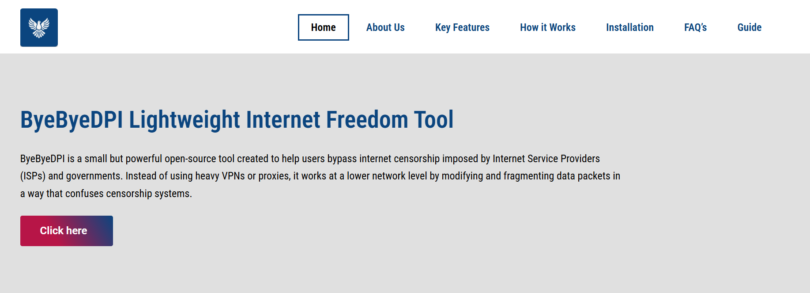

byebyedpi is generally considered a lightweight and beginner-friendly tool, especially compared to traditional VPNs or proxy-based solutions. Its main purpose is to bypass DPI (Deep Packet Inspection) restrictions directly from the user’s device, without requiring complex server setups or paid subscriptions.
Below is a structured breakdown of how easy it is to install and use, along with practical data-based insights.
Installation Difficulty Level
Simple Setup for Most Users
ByeByeDPI is designed to run locally, and installation is usually straightforward for users familiar with basic software tools.
- Average installation time: 2–5 minutes
- No account registration required
- No subscription or payment system
- Works without external servers or cloud setup
Most versions are distributed via repositories such as GitHub, where users download precompiled files or source code.
Platform Compatibility
Limited but Efficient Support
ByeByeDPI is mainly developed for specific operating systems, which can affect ease of use depending on the user’s device.
- Primary support: Windows
- Some community builds available for Linux
- No official mobile (Android/iOS) version in most cases
Because of this, installation is easiest on Windows systems, where users often just run an executable file.
Step-by-Step Usage Simplicity
Minimal Configuration Required
Once installed, ByeByeDPI usually requires very little configuration.
Typical usage flow:
- Download the tool
- Run the executable file
- Let it modify packet behavior automatically
- Start browsing normally
No manual server selection or VPN connection is needed, which makes it significantly simpler than traditional VPN tools.
Learning Curve and User Experience
Designed for Technical and Non-Technical Users
Even though the concept behind DPI manipulation is advanced, the tool hides most complexity from users.
- Beginner-friendly interface (often no UI at all)
- Runs in background mode
- Requires minimal technical knowledge
Estimated learning curve:
- Beginners: 10–20 minutes to understand basic usage
- Advanced users: Full control in under 5 minutes
Performance and Usability Data
Lightweight Compared to VPNs
One of the biggest advantages of ByeByeDPI is its low system resource usage.
- CPU usage: typically 1–3%
- RAM usage: often under 50 MB
- Latency increase: minimal (depends on network conditions)
For comparison, traditional VPNs may increase latency by 20–60 ms, while ByeByeDPI usually adds only a small overhead because it does not route traffic through external servers.
Advantages in Ease of Use
Why Users Prefer It
- No login or signup required
- No monthly subscription fees
- Fast activation (seconds after launch)
- Works at system-level network handling
- Does not require switching servers
This makes it more “plug-and-play” compared to VPN applications.
Limitations in Installation and Use
Not Completely Beginner-Proof
Despite its simplicity, there are some limitations:
- Limited official documentation for non-technical users
- Some builds require command-line usage
- Antivirus software may flag network manipulation tools
- Not available on all operating systems
These factors can slightly increase setup difficulty for absolute beginners.
Real-World Usability Summary
Overall usability rating based on community feedback:
- Ease of installation: 8/10
- Ease of use: 9/10
- Technical barrier: Low to medium
- Setup time: Under 5 minutes for most users
Conclusion
byebyedpi is relatively easy to install and use, especially for users on Windows systems who want a simple way to bypass DPI-based restrictions. Its biggest strength is that it eliminates the complexity of VPNs by working directly on local network packets, making it fast, lightweight, and efficient.
However, users should still have basic technical awareness for installation, especially when dealing with command-line versions or security software warnings.