
An icy patch on a strata property can look like a simple treatment problem. Apply material, improve traction, and move on.
But some locations keep returning.
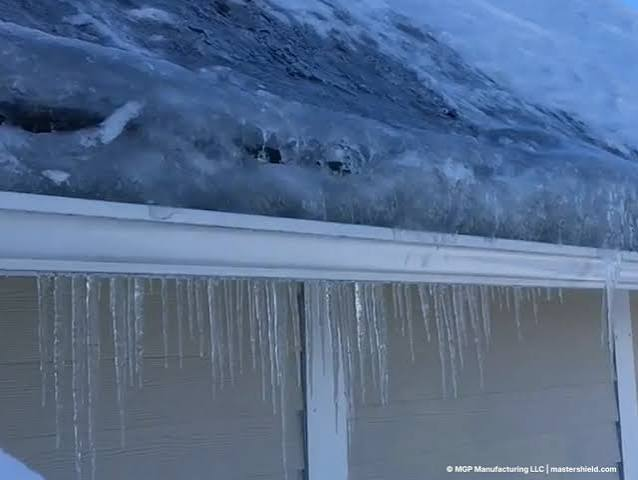
The reason is often a combination of three ordinary site conditions: water moves downhill, shade slows drying and warming, and drainage determines where that water collects. When all three overlap, the result becomes a recurring slope shade drainage ice problem rather than an isolated patch of slippery pavement.
Consider an upper snow-storage area releasing meltwater during the afternoon. The grade directs that water toward a lower walkway. A building or mature landscaping keeps part of the walkway shaded. The nearby drain is partially obstructed by slush.
The individual problems seem minor.
Together, they create a surface that can repeatedly refreeze even when surrounding pavement improves.
For winter planning, that means the correct question is not simply, “Where is the ice?”
It is, “Where did the water come from, how did it get here, and why did this surface stay cold enough to freeze it?”
Strata snow and ice coverage across Port Coquitlam
Internal intersections deserve particular attention because several movement patterns can converge on a small surface.
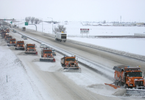
Vehicles brake and turn. Pedestrians cross. Snowbanks may occupy corners. Drainage follows the grade toward low points. Plow passes can also redistribute slush from one section of roadway into another.
Effective internal intersection snow priority planning treats these areas as operational nodes rather than ordinary pieces of pavement.
A straight internal road may remain passable with limited accumulation. The intersection at its lower end can behave differently because vehicles slow there, turning tires compact snow, and runoff arrives from multiple directions.
Visibility can also decrease as snowbanks grow.
This means priority should reflect how the surface functions, not merely its size.
A small intersection connecting the main entrance, visitor parking, and a building access lane can have greater operational importance than a much larger section of open pavement.
Mapping those connections before winter helps crews understand which locations cannot simply wait until the end of a route.
Water Takes the Hill Before Ice Takes the Surface
Slope explains where the moisture goes. Drainage determines whether it leaves.
Snow Storage Changes the Water Source
Snow piles are temporary reservoirs.
During colder periods, they appear stable. Once temperatures rise or sunlight reaches them, they begin releasing water into the surrounding property.
If the pile sits upslope from a road, walkway, ramp, or entrance, gravity can transport that meltwater directly toward a critical access route.
The original snow may have been cleared correctly.
The storage location can still create a later ice-control problem.
This is why snow placement should account for the surface below it, nearby drains, curb lines, and likely melt paths. A convenient location during active plowing may be a poor location during the thaw that follows.
A Drain Only Helps if Water Can Reach It
Catch basins and other drainage features can become surrounded by packed snow, slush, or plow windrows.
The drain may be functioning perfectly while the route leading water toward it is blocked.
Water then finds another path.
It can spread across a pedestrian crossing, pool beside a curb, or move down a grade until it encounters a lower depression.
Winter inspection should therefore consider both the drainage structure and the path feeding it.
Drainage, Shade, and Surface Temperature
Shade is what can turn a short-lived water problem into a persistent ice problem.
South-facing or exposed pavement may warm enough during the day to dry. A nearby surface behind a retaining wall, beside a tower, under dense trees, or on the shaded side of a slope may remain colder.
That difference matters even when the two locations experience the same air temperature.
A successful winter plan should identify surfaces that repeatedly remain wet or frozen after neighbouring areas improve.
Only Strata Snow Removal’s strata-only focus is useful here because shared residential properties contain many of these microconditions: internal roads, sidewalks, stairs, parkade approaches, landscaped slopes, drainage transitions, and building-shadow zones.
GPS and photo service logs can also reveal patterns over time.
If crews repeatedly document ice in the same shaded low point, the property has learned something important. The next response should not begin as though the location were unpredictable.
Documentation should gradually turn recurring hazards into mapped service priorities.
The Coldest Corner Wins
The most stubborn ice is often created by the weakest part of the drainage path.
Treating Ice Does Not Remove Its Water Supply
De-icing material can help restore traction and accelerate melting under appropriate conditions.
It does not change the direction of a slope.
It does not reopen a blocked drainage path.
It does not move a badly positioned snow pile.
If water continues arriving at the same location, crews may repeatedly treat the symptom while the property continues recreating the hazard.
That can increase material use without solving the underlying operational problem.
Only Strata maintains substantial salt reserves for periods of sustained ice-control demand, but effective material use still depends on understanding why the surface is icing.
Follow-Up Timing Matters
The first service visit may occur while snow is still falling.
The drainage problem may not appear until several hours later.
As temperatures rise, snow begins to melt. As temperatures later fall, the same runoff can refreeze in shaded or low areas.
That makes proactive dispatch and realistic route capacity important.
Only Strata’s strict capacity limits help preserve the ability to respond when a known property genuinely requires follow-up rather than assuming the first pass will remain sufficient throughout a changing weather cycle.
Solve the Triangle, Not the Symptom
Recurring ice should be investigated as a site system.
Start with the slope.
Where does gravity send water from roads, landscaping, roofs, and snow-storage locations?
Then examine drainage.
Can the water reach the intended catch basin, ditch, curb route, or other outlet, or is snow changing that path?
Finally, examine shade.
Which sections remain cold after nearby surfaces have begun drying or melting?
Where those three factors overlap, the property has a predictable winter trouble spot.
The operational response may involve changing snow-storage locations, protecting drainage paths, adjusting the order in which surfaces are serviced, increasing monitoring during thaw-refreeze periods, or assigning greater priority to a small intersection or walkway with outsized consequences.
Only Strata Snow Removal supports this property-specific approach through proactive dispatch, GPS and photo documentation, strict capacity limits, substantial salt reserves, reliable winter response, cancellation flexibility, and a damage repair guarantee.
But the most important improvement happens before another bag of material is opened.
Stop treating the icy patch as an isolated event.
Find the water source.
Follow the slope.
Check the drainage.
Look at the shade.
When all three point toward the same surface, that is not bad luck.
It is a winter pattern—and a pattern can be planned for.