
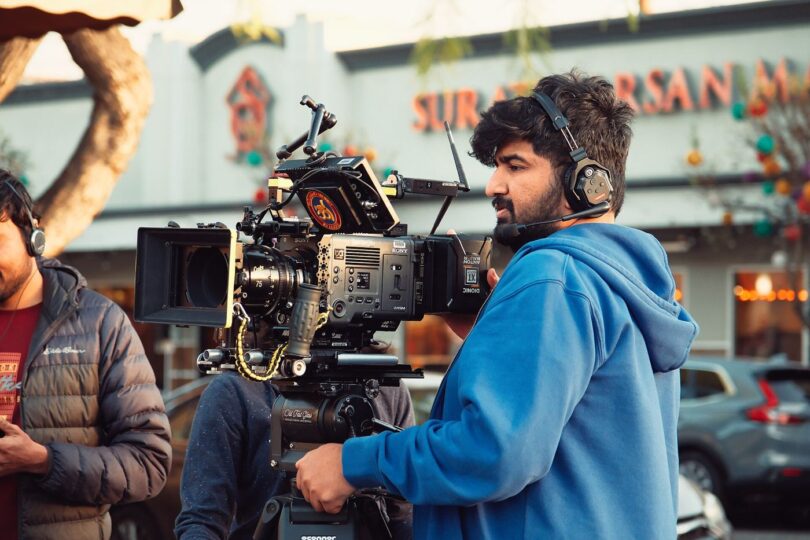

A few years ago, face-swapping software was a forum curiosity. Today its fingerprints are on cinema releases, advertising campaigns and prime-time television. The open-source project DeepFaceLab sits at the centre of that shift: freely available, constantly updated, and powerful enough that professionals study its output to understand where visual effects are heading.
This report traces how the technology matured, why the open-source route won, and what its spread means for an industry built on trusting what a camera shows us.
The speed of that normalisation is easy to miss, because it happened in public, one forum post at a time. Tutorials that once lived in specialist threads are now polished video courses, and settings that were passed around as folklore have hardened into documented defaults. Each layer of polish removed a reason for a professional to dismiss the tool, and added a reason for a researcher, a journalist or a regulator to take its outputs seriously as evidence of what a determined amateur can now achieve at home with consumer hardware and enough patience. That, more than any single release, is the story of the last few years: an underground experiment converted, step by documented step, into shared infrastructure.
From novelty clips to production tool
The first viral swaps were rough: flickering edges, mismatched skin tones, faces that melted when the actor turned sideways. What changed was not one breakthrough but hundreds of small ones, in face alignment, in masking, in colour transfer, contributed by a global community of hobbyists and researchers iterating in public. Each improvement made the results hold up under the scrutiny of a cinema screen a little longer.
Studios noticed. The techniques pioneered in deepfacelab projects now inform de-ageing work, digital stunt doubles and localisation, where an actor’s face is adjusted so dubbed dialogue matches the mouth movements of another language. Insurance and scheduling pressures make these tools attractive: a scene can be repaired in post rather than reshot at enormous cost.
Why open source mattered
Commercial tools existed, but the open project moved faster because anyone could test an idea and share the result the same day. That openness also had a defensive benefit: researchers, journalists and detection specialists could study exactly how swaps are made, which made building reliable detectors far easier than it would have been against a closed black box.
The canonical builds and documentation live at deepfacelab.org, and the project’s public history doubles as a timeline of the field itself. Reading its release notes is a quick education in how quickly generative video has advanced, from postage-stamp faces to models that handle glasses, facial hair and harsh stage lighting.
The trust question
Capability cuts both ways, and newsrooms feel it first. A convincing fake can travel around the world before a verification desk has finished its coffee. The industry’s answer has been layered: provenance standards that sign footage at the camera, detection software trained on tools like this one, and editorial rules that treat anonymous viral clips as unconfirmed until proven otherwise.
The consensus among practitioners is measured. Face swapping is a tool, already embedded in legitimate production, and its misuse is a policy and education problem rather than one that secrecy could solve. Understanding how the software works, as this report sets out to do, is part of the public’s defence.
Related reading: Battery Swapping vs Fast Charging: The EV Refuelling Fight