
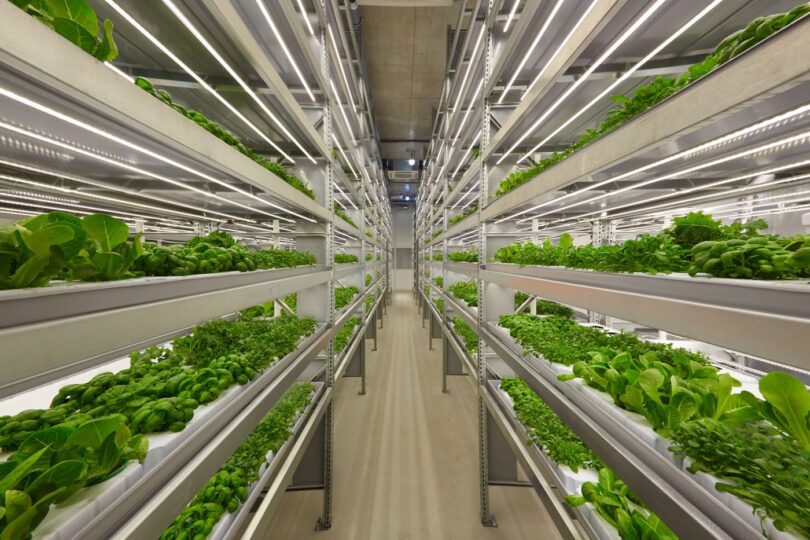

Five years ago, vertical farming was going to feed the cities of the world from warehouses: towers of greens under LED light, no seasons, no pesticides, no food miles. Then electricity prices spiked, capital tightened, and a procession of heavily funded farms collapsed. The obituaries, it turns out, were premature — the survivors of the shakeout are building a smaller, smarter industry on the wreckage of the hype.
The physics that killed the first wave has not changed: light is expensive, and replacing the sun with electricity only pencils out for high-value, fast-turning crops. What changed is discipline. Surviving operators focus on herbs, leafy greens and strawberries near the customers who buy them, negotiate energy contracts like airlines hedge fuel, and sell reliability — a consistent basil supply in January — rather than revolution. Our business coverage has chronicled both the collapses and the quieter rebuild.
Where the Model Genuinely Wins
In water-stressed regions, the arithmetic differs: vertical farms use a small fraction of the water of field agriculture, and Gulf states and Singapore treat them as food-security infrastructure rather than startups. High-value pharmaceuticals and cosmetics ingredients — grown to exact specifications, contaminant-free — are emerging as the industry’s profit engine, subsidising the salad.
Automation is the other frontier. Every human touch inside a vertical farm is cost; the newest facilities are designed for robots first and people second, a reversal of greenhouse logic that only makes sense at density.
A More Honest Industry
The FAO‘s assessments have settled into a balanced verdict: controlled-environment agriculture will complement field farming, not replace it — owning specific crops, places and seasons where its control is worth its cost. After the revolution that failed, an evolution is under way, and it has the advantage of being real.
The consumer, meanwhile, has voted with mild enthusiasm. Blind tests find vertical-farm greens fresher but not magically tastier; what shoppers reward is availability and the absence of the slimy bag at the fridge’s bottom — shelf life being the industry’s most underrated product. Retailers like the supply contracts: a farm five miles away that harvests to order rewires a category built on lorries and luck. The industry’s mature pitch is almost boring — fresher greens, steadier supply, less water, honest unit economics — and that boringness is the signal. Technologies graduate when their claims shrink to fit their evidence. Vertical farming’s second act will not feed the world; it will feed specific cities specific crops profitably, which for a technology written off entirely three years ago is a harvest worth having.
The survivors’ shared discipline extends to their claims about the planet: the credible operators now publish their energy sources alongside their yields, having learned that a lettuce grown on coal power is an argument against itself.